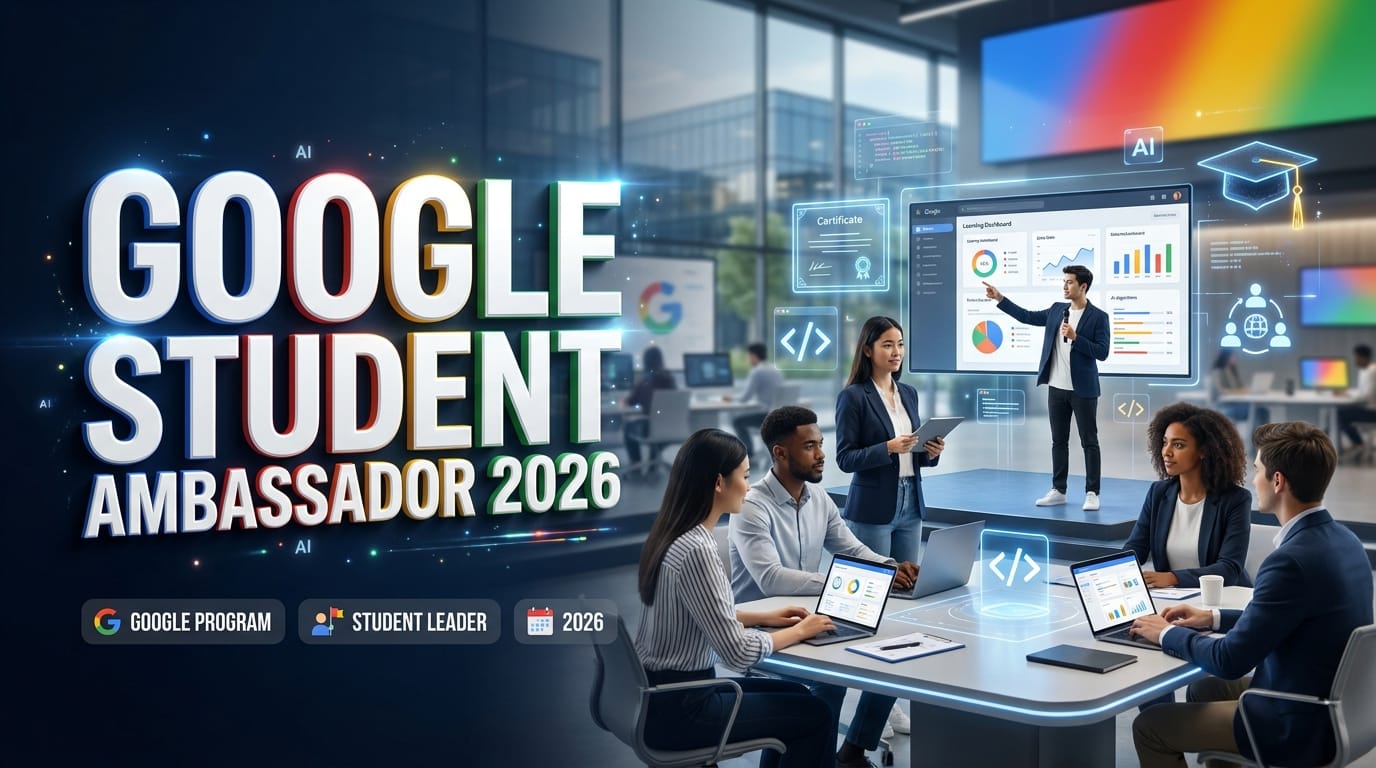
The Google Student Ambassador 2026 program is quickly becoming one of the most talked-about student opportunities in the tech and AI space. Across campuses in India and other countries, thousands of students are applying to become part of this leadership-driven initiative focused on Google Gemini AI, community building, workshops, and campus innovation. Recent reports and official application portals show that the 2026 edition is larger, more AI-focused, and more competitive than previous years.
What Is the Google Student Ambassador Program 2026?
The Google Student Ambassador Program 2026 is a campus leadership initiative designed to identify students who are passionate about technology, artificial intelligence, communication, and community building. The program allows selected students to represent Google-related initiatives within their colleges while educating peers about AI tools like Google Gemini. Unlike traditional internships where students work quietly behind screens, this program feels more like becoming the “face of innovation” on campus. You organize workshops, create awareness campaigns, help students learn AI tools, and build communities around technology.
According to recent application portals and Google-related announcements, the 2026 edition strongly emphasizes AI adoption, Gemini education, leadership development, and peer engagement. Students are expected to promote responsible AI use and encourage fellow students to explore productivity and creativity through AI-powered tools. That shift is not surprising. AI has become the electricity of the digital era. Just as computers transformed campuses decades ago, AI tools are now reshaping how students study, build projects, and even prepare for careers.
The Main Goal Behind the Program
The core mission of the program is simple: create student leaders who can bridge the gap between cutting-edge technology and campus communities. Google wants ambassadors who are not just technically skilled but also socially active, creative, and influential. Think about it like this: a great ambassador is not merely a coder sitting in a lab. They are someone who can explain AI to beginners, organize engaging events, and motivate students to explore technology fearlessly.
This approach makes the program attractive to students from multiple backgrounds. Many assume only hardcore programmers are eligible, but that is no longer true. Reports surrounding the 2026 cohort suggest that students from engineering, management, arts, media, and other disciplines are applying successfully. Communication skills and campus involvement matter just as much as technical expertise.
Why Google Is Focusing on AI in 2026
Artificial intelligence is no longer a futuristic concept. It has become part of everyday academic life. Google’s recent education updates show a massive push toward AI-powered learning systems, Gemini integration, and AI-assisted productivity tools. Universities worldwide are adapting their teaching models, and companies want students who can work comfortably with AI technologies.
That is why the ambassador program revolves heavily around Gemini AI awareness. Ambassadors are expected to host workshops, educate peers, and demonstrate practical use cases of AI. Google clearly understands that today’s students are tomorrow’s developers, entrepreneurs, researchers, and content creators. Building AI familiarity early gives students a major advantage in future careers.
Eligibility Criteria for Google Student Ambassador 2026
Eligibility is one of the biggest questions students ask before applying. The good news is that the program appears to be relatively inclusive compared to highly technical internships. Recent application portals indicate that students graduating after 2026 are generally eligible, and the program welcomes participants from multiple academic disciplines.
Most applicants fall within the 18–25 age group and are actively enrolled in colleges or universities. Students must also demonstrate interest in technology, AI, leadership, or community engagement. While coding knowledge can help, it is not always mandatory. A student who runs campus events, creates educational content, or actively participates in clubs can still become a strong candidate.
Academic Requirements
There is no strict CGPA requirement publicly emphasized in many application discussions. That surprises many students because they assume Google only selects toppers. In reality, leadership and communication often outweigh academic perfection. The program seeks students who can inspire communities, not just score marks in exams.
Still, maintaining decent academic performance is helpful because it reflects consistency and discipline. Students from engineering branches naturally dominate applications, but management students, creators, marketers, and AI enthusiasts are increasingly entering the ecosystem. This broader inclusion mirrors how AI itself is becoming interdisciplinary.
Skills That Improve Selection Chances
Certain skills can significantly improve your chances of selection:
| Skill | Why It Matters |
|---|---|
| Communication | Helps in hosting workshops and events |
| Leadership | Important for community building |
| AI Curiosity | Shows alignment with Gemini-focused goals |
| Content Creation | Useful for social engagement campaigns |
| Networking | Helps build campus influence |
| Public Speaking | Valuable during presentations and sessions |
Students active on LinkedIn, Instagram, coding communities, or tech clubs often stand out because they already demonstrate visibility and engagement. Recent ambassador discussions also show that students with social media presence and community participation gain an advantage.
How to Apply for Google Student Ambassador 2026
The application process for Google Student Ambassador 2026 is relatively straightforward, but competition is intense. The official application forms usually ask about your college, course, leadership experience, campus activities, social media profiles, and interest in AI. Some applicants may also face short video interview rounds after initial screening.
The process may seem simple on the surface, but the real challenge lies in differentiation. Thousands of students apply. The selection team wants applicants who feel authentic, energetic, and capable of driving impact on campus.
Step-by-Step Application Process
The general application journey typically follows this structure:
- Fill out the online application form.
- Share your academic and campus details.
- Mention leadership or community experience.
- Submit social profiles if requested.
- Complete screening rounds.
- Attend interview or onboarding sessions if shortlisted.
Students are advised to answer honestly instead of copying generic responses from the internet. Recruiters can immediately spot robotic or exaggerated answers. Authenticity matters more than sounding “perfect.”
Common Mistakes Students Make
One of the biggest mistakes is treating the application like a standard internship form. This program values personality and impact. Students who only mention coding skills without discussing leadership or communication may appear one-dimensional.
Another major issue is submitting weak social profiles or inactive professional accounts. In a digital-first ambassador role, visibility matters. Even simple LinkedIn activity, event participation, or content sharing can improve credibility. Some applicants also ignore spelling, clarity, and detail in their responses, which weakens their first impression.

Selection Process Explained
The selection process varies slightly across regions, but recent student discussions indicate that the 2026 cycle includes application screening, shortlisting, interview rounds, and onboarding procedures. Because applications are large in volume, recruiters look for standout qualities immediately.
Application Screening
During screening, reviewers likely focus on leadership potential, communication style, AI enthusiasm, and campus influence. Students who clearly explain how they would contribute to their college communities often stand out more than applicants who simply list achievements.
The screening stage is similar to casting actors for a movie. Talent matters, but personality and energy matter too. Recruiters want ambassadors who can represent the Google ecosystem confidently and inspire others.
Interview and Final Selection
Shortlisted candidates may face interview rounds or video assessments. These interviews usually evaluate confidence, communication, creativity, and problem-solving ability. Applicants may be asked how they would organize workshops, promote Gemini tools, or engage students on campus.
Students who appear genuinely excited about technology tend to perform better than those memorizing scripted answers. Passion is difficult to fake. If you truly enjoy helping others learn new tools or building communities, that enthusiasm naturally becomes visible during interviews.
Roles and Responsibilities of a Google Student Ambassador
Being selected is exciting, but the actual role requires commitment. Ambassadors are expected to actively organize events, educate students about AI tools, build campus engagement, and collaborate with fellow ambassadors. This is not a passive title you simply add to LinkedIn.
Hosting AI Workshops
One major responsibility involves organizing workshops and awareness sessions related to AI and Gemini. These sessions may include productivity demonstrations, AI-assisted research tips, content creation tutorials, or educational events for beginners.
Public speaking becomes an important skill here. Some students initially fear standing before crowds, but ambassador programs often help develop confidence over time. Think of it as a gym for leadership skills. The more events you host, the stronger your communication abilities become.
Creating Campus Communities
Community building is another crucial responsibility. Ambassadors often create discussion groups, online communities, student meetups, and collaborative learning environments. They become connectors within their campuses.
This networking element can become incredibly valuable. Many ambassadors meet future co-founders, collaborators, hackathon teammates, and professional connections through these activities. Sometimes the relationships built during such programs become more valuable than the certificates themselves.
Benefits of Becoming a Google Student Ambassador
The benefits extend far beyond free merchandise or social media recognition. Students gain leadership experience, networking opportunities, practical AI exposure, and career credibility. Some ambassador programs also provide training sessions, mentorship opportunities, exclusive events, and certificates.
Networking Opportunities
Networking is perhaps the biggest hidden advantage. Ambassadors interact with Google-related communities, fellow student leaders, and industry professionals. These connections can open doors to internships, collaborations, and future career opportunities.
A single conversation at an ambassador event can sometimes lead to unexpected opportunities. That is how modern careers often work. Relationships matter just as much as resumes.
Career and Resume Advantages
Recruiters appreciate candidates who demonstrate initiative beyond academics. A Google-related ambassador role signals leadership, communication ability, and adaptability. Those qualities are highly valuable in today’s AI-driven job market.
Students who actively contribute during the program often gain stronger LinkedIn visibility and improved confidence during interviews. Many recruiters see ambassador experience as evidence that a candidate can work with teams, organize projects, and represent organizations professionally.
Google Gemini and the AI Revolution in Campus Programs
The 2026 ambassador ecosystem revolves heavily around Google Gemini AI. This reflects a larger transformation happening across the education industry. AI is no longer optional knowledge. It is rapidly becoming a core productivity skill.
How Gemini Is Integrated Into the Program
Ambassadors are expected to educate students about Gemini use cases, AI productivity, and responsible AI practices. Recent application forms and program descriptions repeatedly mention Gemini-focused activities. This indicates Google’s strategy of expanding AI awareness directly through student communities.
Universities are becoming experimental labs for AI adoption. Students are already using AI for coding help, research summaries, brainstorming, presentations, and productivity enhancement. Google clearly wants ambassadors to accelerate that transformation responsibly.
Why AI Knowledge Matters for Students
Students who understand AI today will likely adapt faster to tomorrow’s workplace. Employers increasingly value AI familiarity across industries including marketing, software development, education, finance, and media.
Learning AI now is similar to learning internet skills during the early 2000s. Those who adapted early gained huge advantages later. The same pattern is happening with AI tools today.

Challenges Students May Face During the Program
Despite its benefits, the program also has challenges. Managing academics alongside ambassador responsibilities can become difficult. Hosting events, creating content, attending meetings, and maintaining community engagement requires time and consistency.
Some students may initially join expecting only rewards or recognition. But successful ambassadors understand that impact requires effort. Leadership roles are exciting, but they also involve responsibility. Burnout can happen if students fail to balance studies and activities effectively.
There are also concerns about legitimacy in certain unofficial applications circulating online. Some Reddit users recently discussed confusion regarding verification and sensitive document requests. Students should always verify whether application forms and communications originate from legitimate sources before sharing personal information.
Tips to Get Selected in Google Student Ambassador 2026
Students preparing for the program should focus on building a balanced profile instead of obsessing over technical perfection. Communication, confidence, and campus involvement matter enormously.
Here are some practical tips:
- Build an active LinkedIn profile.
- Participate in workshops or hackathons.
- Learn basic AI and Gemini concepts.
- Improve public speaking skills.
- Share meaningful content online.
- Demonstrate leadership in college activities.
Consistency matters more than overnight achievements. Recruiters prefer students who genuinely contribute to communities rather than applicants chasing titles for status alone.
Watching recent ambassador interviews and discussions can also help students understand expectations better. Videos explaining the application process and student experiences provide useful insights.
Is Google Student Ambassador 2026 Worth It?
For most students, the answer is yes. The program offers practical leadership experience, AI exposure, networking opportunities, and personal growth. Even students who never become software engineers can benefit because communication and leadership skills remain valuable in every career path.
The real value depends on how actively students participate. Someone who merely adds the title to LinkedIn may gain little. But students who organize workshops, connect with peers, and genuinely engage with the community can experience significant growth.
Think of the ambassador program like a launchpad. It does not guarantee success automatically, but it can accelerate opportunities for students willing to put in effort. In a world increasingly shaped by AI and digital collaboration, programs like this help students move from passive learners to active contributors.
Conclusion
The Google Student Ambassador 2026 program represents much more than a campus title. It reflects the growing importance of AI literacy, leadership, communication, and community-driven innovation. Google’s focus on Gemini and AI-powered education shows where the future is heading, and ambassadors are positioned at the center of that movement.
Students who want to stand out in today’s competitive landscape must go beyond classroom learning. They need practical experience, visible leadership, and adaptability. This program offers exactly that combination. Whether your goal is networking, career growth, AI exposure, or personal development, becoming a Google Student Ambassador can become a transformative experience when approached seriously.
FAQs
1. Is Google Student Ambassador 2026 a paid program?
Most discussions suggest that the program focuses more on rewards, certificates, networking, and exposure rather than a fixed monthly salary. Some incentives may depend on performance and activities.
2. Can non-engineering students apply for Google Student Ambassador 2026?
Yes. Many reports and discussions indicate that students from multiple academic backgrounds are eligible if they demonstrate leadership, communication, and AI interest.
3. Does Google Student Ambassador 2026 require coding skills?
Coding helps but is not always mandatory. Communication, leadership, and community engagement are equally important.
4. How competitive is the Google Student Ambassador Program?
The program is highly competitive because thousands of students apply nationwide. Strong communication skills and authentic campus involvement improve selection chances.
5. What is the biggest advantage of becoming a Google Student Ambassador?
The combination of leadership development, AI exposure, networking opportunities, and resume credibility makes it highly valuable for students.