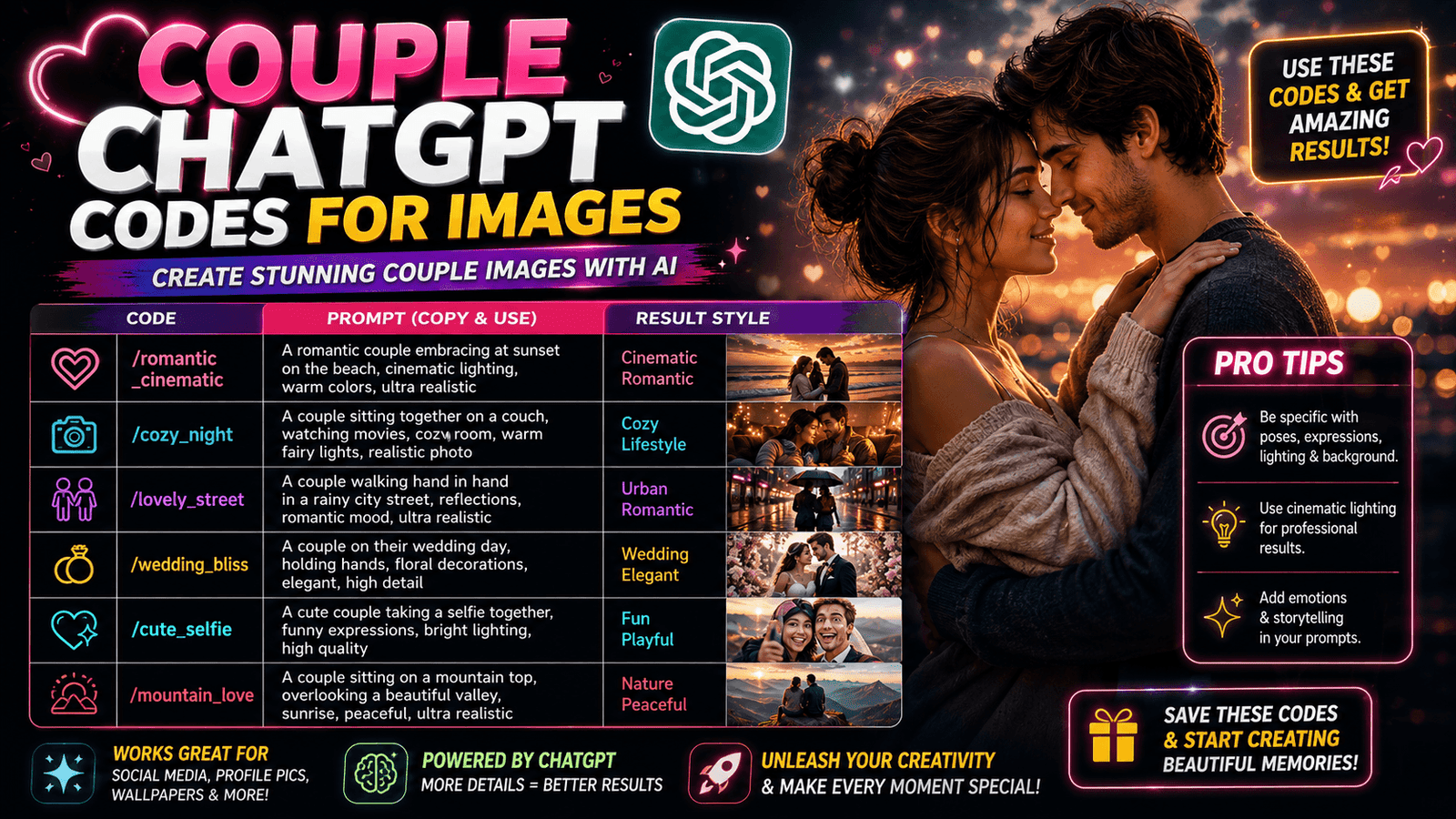
What Are Couple ChatGPT Image Codes?
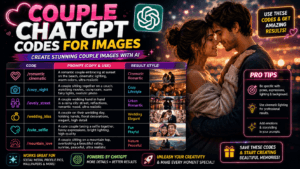
Couple ChatGPT codes for images are essentially carefully written AI image prompts that tell ChatGPT what kind of couple photograph, scene, lighting, clothing, pose, background, and overall mood you want to create. You do not need to learn a complicated programming language or memorize an actual secret code. In most cases, you can simply describe the image naturally and give ChatGPT enough information to understand the visual result you want. OpenAI’s current guidance recommends clear, descriptive prompts that identify the purpose, main subject, setting, visual style, and important constraints.
This becomes especially useful when you want to create romantic couple photos, cinematic portraits, wedding images, travel pictures, Instagram posts, profile pictures, or aesthetic relationship photos without arranging a professional photoshoot. If you upload reference photographs, you can also ask ChatGPT to use them as visual references while changing the setting, clothes, lighting, or composition. ChatGPT Images currently supports creating new images as well as editing uploaded images, and you can request different aspect ratios for different platforms.
Why Couple Prompts Are Trending
AI-generated couple photography has become popular because it allows people to experiment with visual concepts that would normally require a photographer, location, wardrobe, lighting setup, and significant time. A person can start with a simple idea such as “create a romantic couple portrait” and then progressively refine the result by asking for a different background, pose, expression, outfit, camera perspective, or lighting style. OpenAI specifically recommends iterative refinement rather than trying to create the perfect prompt in a single attempt.
COUPLE POSE CODES – 100 CODES
SELFIE & CANDID
- 1. /couplefunselfie
- 2. /mirrorcoupleselfie
- 3. /coupleselfie
- 4. /candidcouple
- 5. /candidcoupleflash
- 6. /romanticselfie
- 7. /candidromance
CLOSE & COZY
- 8. /cozyclosecouple
- 9. /intimatefaceclose
- 10. /hiddenfacecouple
- 11. /faceclose
- 12. /face2face
- 13. /romanticcloseup
HUGS
- 14. /backhug
- 15. /hug
- 16. /sidehug
- 17. /waisthug
- 18. /shoulderhug
- 19. /protectivehug
- 20. /gentlehug
- 21. /closehug
- 22. /together
LEANING & RESTING
- 23. /shoulderlean
- 24. /headonshoulder
- 25. /headtohead
- 26. /chinrestcouple
- 27. /behindshoulder
- 28. /cheektohead
SITTING & WALKING
- 29. /sittingtogether
- 30. /walkingtogether
- 31. /datewalk
- 32. /walkinghandinhand
HAND POSES
- 33. /handholdcouple
- 34. /waisthug
KISSES & TOUCH
- 35. /foreheadkiss
- 36. /cheekkiss
- 37. /nosekiss
- 38. /almostkiss
- 39. /foreheadtouch
GAZES & LOOKS
- 40. /eyelookcouple
- 41. /romanticlook
- 42. /couplegaze
- 43. /lovinggaze
COUPLE STYLES
- 44. /playfulcouple
- 45. /cuteplayful
- 46. /naturalcouple
- 47. /softromance
- 48. /cozyromance
DATE & CAFE
- 49. /datecouple
- 50. /cafedate
- 51. /cozycafedate
- 52. /coffeecouple
- 53. /teacouple
- 54. /picniccouple
NATURE & OUTDOORS
- 55. /sunsetcouple
- 56. /sunsetromance
- 57. /goldenhourcouple
- 58. /raincouple
- 59. /rainromance
- 60. /wintercouple
- 61. /beachcouple
- 62. /mountaincouple
- 63. /streetcouple
- 64. /rooftopcouple
- 65. /balconycouple
INDOOR & HOME
- 66. /bedroomcozy
- 67. /windowcouple
- 68. /mirrorromance
- 69. /cozyhomecouple
VEHICLE & TRAVEL
- 70. /carcouple
- 71. /bikecouple
- 72. /roadtripcouple
- 73. /travelcouple
- 74. /romantictravel
SPECIAL LOCATIONS
- 75. /elevatormirrorcouple
- 76. /festivalcouple
TRADITIONAL & CULTURAL
- 77. /traditionalcouple
- 78. /ethniccouple
- 79. /sareecouple
- 80. /kurtacouple
LUXURY & EDITORIAL
- 81. /royalcouple
- 82. /luxurycouple
- 83. /editorialcouple
- 84. /cinematiccouple
- 85. /filmlookcouple
- 86. /luxurycoupleportrait
CREATIVE STYLES
- 87. /romanceposter
- 88. /romancecollage
- 89. /lovestoryfilm
- 90. /dreamycouple
- 91. /romanticescape
COUPLE PORTRAITS
92. /coupleportrait
93. /closecoupleportrait

94. /naturalportraitcouple
95. /candidportraitcouple
LIGHTING STYLES
- 96. /softlightcouple
- 97. /flashcouple
- 98. /nightcouple
- 99. /citylightcouple
MASTER CODES
- 100. /couplereferenceexact
- 101. /coupleposeexact
For example, you could begin with a basic romantic portrait and then say, “Keep the same couple and composition, but change the background to a sunset beach and make the lighting warmer.” You could then request a vertical version for social media or a wide version for a thumbnail. This conversational editing process makes image creation feel less like traditional graphic design and more like directing a photographer.
Another reason these prompts are useful is that they can be adapted to many visual styles. You can request realistic photography, editorial fashion photography, dreamy cinematic imagery, traditional Indian aesthetics, travel photography, wedding photography, or minimal studio portraits. The trick is to explain what you actually want instead of relying only on vague words such as “beautiful” or “amazing.”
How to Create Couple Images in ChatGPT
Creating a couple image is relatively straightforward. Start a ChatGPT conversation and use the image-generation feature, then describe the image you want. You can also upload an existing photograph and explain precisely what you want changed. Current ChatGPT Images supports both new image creation and image editing, including edits to specific parts of an image.
If you want the generated image to resemble specific real people, reference photos are particularly important. You can upload suitable photos and clearly explain which image represents which person. For example, you might say that Image 1 is the first person’s reference and Image 2 is the second person’s reference, then specify that the generated scene should preserve their recognizable facial characteristics while changing the environment. OpenAI’s image guidance recommends using clear spatial language such as left, right, foreground, and background when combining multiple uploaded images.
Uploading Reference Photos
For a personalized couple portrait, upload clear reference images where the faces are visible and reasonably well lit. Avoid giving the model conflicting instructions such as changing the identity while simultaneously demanding an exact likeness. Instead, separate the instructions into things that should remain fixed and things that should change.
A useful structure is: “Use the uploaded photos as references for the two people. Preserve their recognizable facial features and natural appearance. Change only the clothing, background, pose, and lighting.” This gives the model a much clearer editing target. If you are editing an existing image, OpenAI recommends explicitly stating what should change and what should remain unchanged.
Writing Better Couple Prompts
A good prompt does not necessarily have to be extremely long. OpenAI’s current image-generation guidance says that one to three clear sentences can often be enough, provided the prompt communicates the important details.
For more complex couple photographs, however, adding specific information can improve control. Mention the subjects, location, clothing, pose, lighting, camera perspective, mood, composition, and aspect ratio when those details matter.
For example:
“Create a realistic cinematic portrait of a young couple walking together beside a quiet beach during golden hour. Preserve their natural facial appearance, use soft warm sunlight, subtle wind movement in their clothing, shallow depth of field, realistic skin texture, romantic mood, and a premium editorial photography look. Use a vertical 4:5 composition.”
The prompt gives the image model a clear visual direction without turning the request into a confusing wall of instructions.
Best Couple ChatGPT Codes for Images
Below are several ready-to-use couple ChatGPT image prompts that you can copy, customize, and experiment with.
Romantic Couple Photo
“Create a realistic romantic portrait of a couple standing close together in a beautiful garden during golden hour. Keep their facial appearance natural and recognizable, with warm sunlight filtering through the trees, soft background bokeh, elegant casual clothing, genuine smiles, natural body language, realistic skin texture, cinematic photography, shallow depth of field, premium professional photoshoot quality, and a warm emotional atmosphere.”
This prompt works well when you want a natural-looking relationship photograph rather than an overly dramatic movie poster. You can replace the garden with a beach, café, park, city street, rooftop, or another location.
Cinematic Couple Photo
“Create a cinematic photograph of a couple walking together through a beautifully illuminated city street at night. Preserve their recognizable facial characteristics from the reference photos, add realistic reflections on the wet pavement, soft neon lights in the background, subtle atmospheric haze, natural expressions, sophisticated outfits, shallow depth of field, realistic photography, dramatic but believable lighting, and a premium movie-like composition.”
This is ideal for people who want the popular cinematic couple photo aesthetic. You can make it more dramatic by specifying rain, streetlights, fog, or a sunset.
Instagram Couple Portrait
“Create a stylish vertical Instagram portrait of a fashionable couple posing naturally together at a modern outdoor café. Keep their faces natural and recognizable, use elegant coordinated outfits, soft daylight, realistic skin texture, subtle background blur, modern lifestyle photography, clean composition, sophisticated color grading, authentic expressions, and premium editorial photography quality. Leave some clean space around the subjects.”
A clean composition is especially useful for social-media posts because it gives you flexibility when adding captions or other design elements later.

Couple Image Prompts for Different Styles
Wedding Couple
“Create a luxurious realistic wedding portrait of the couple standing together at an elegant wedding venue decorated with flowers and warm ambient lights. Preserve their recognizable facial appearance, dress them in sophisticated traditional wedding attire, use cinematic golden lighting, realistic fabric details, natural expressions, elegant composition, shallow depth of field, professional wedding photography, and a premium romantic atmosphere.”
You can customize this prompt for different cultural outfits, venues, flower arrangements, or photography styles. If you are using real people’s photos, make sure you have permission to use their likeness.
Traditional Couple
“Create a realistic traditional couple portrait using the uploaded reference photos. Preserve their recognizable facial characteristics while dressing them in elegant traditional Indian clothing. Place them in a beautifully decorated heritage setting with warm natural lighting, subtle architectural details, authentic fabrics and jewelry, natural expressions, realistic skin texture, cinematic photography, and a sophisticated editorial composition.”
This type of prompt is useful for creating cultural portraits while keeping the overall image polished and photographic.
Travel Couple
“Create a realistic cinematic travel photograph of a couple standing together at a breathtaking mountain viewpoint during sunrise. Preserve their recognizable facial appearance, dress them in stylish travel outfits, add realistic atmospheric mountains in the background, soft morning sunlight, natural poses, subtle wind movement, realistic textures, professional travel photography, cinematic depth, and an adventurous romantic mood.”
You can replace the mountain location with a beach, European street, desert, waterfall, snowy destination, or famous architectural setting.
How to Keep Faces Consistent
One of the most important considerations when creating personalized couple images is facial consistency. If you want the generated image to resemble people from uploaded reference photographs, clearly explain that the reference images are being provided for appearance guidance. Avoid unnecessarily asking the system to redesign their faces when your goal is consistency.
For example, instead of simply saying “make a romantic couple,” say, “Use the uploaded photographs as visual references for the two people. Keep their recognizable facial characteristics and natural appearance consistent. Change the environment, clothing, pose, and lighting, but do not intentionally redesign their faces.” Clear constraints can make the desired editing goal easier to understand. OpenAI’s image-generation guidance specifically recommends stating what should remain fixed when making edits.
You can also make changes gradually. First create the basic couple composition. Then request one modification at a time, such as changing the background or clothing. OpenAI recommends small, targeted revisions because iterative changes can help preserve the important aspects of an image while improving individual details.
Best Aspect Ratios for Couple Images
The best aspect ratio depends on where you plan to use the final image. ChatGPT Images supports different aspect ratios, and the current interface includes options for horizontal, square, and vertical images.
| Use Case | Recommended Format |
|---|---|
| Instagram portrait | 4:5 |
| Instagram Story/Reel | 9:16 |
| YouTube thumbnail | 16:9 |
| Facebook post | 1:1 or 4:5 |
| Website banner | 16:9 or wider |
| Profile picture | 1:1 |
| Desktop wallpaper | 16:9 |
Instead of relying only on technical codes, simply tell ChatGPT the format you want. For example, “Create this as a vertical 9:16 composition for an Instagram Story” or “Create a 16:9 horizontal composition suitable for a YouTube thumbnail.” Current ChatGPT Images can also regenerate an image into a different aspect ratio using the image editor.
Tips for Better AI Couple Photos
The easiest way to improve your results is to stop thinking of prompts as magic passwords. They are instructions. The clearer your instructions, the easier it is for the image generator to understand your creative direction. OpenAI recommends being specific about the subject, context, style, composition, lighting, and constraints instead of depending on vague descriptions.
If the first result is almost right but not perfect, don’t throw away the entire prompt. Ask for a targeted revision. You could say, “Keep the couple, clothing, composition, and background exactly the same. Make the lighting softer and more natural.” Or: “Keep everything unchanged except the background; replace the city street with a sunset beach.” This approach treats the AI more like an assistant photographer who is receiving feedback after each shot.
When you want text inside an image, be unusually specific. OpenAI recommends putting the desired text in quotation marks or uppercase and specifying characteristics such as placement, font style, size, and color. Keeping headlines short can also make text rendering easier.
Finally, don’t overload every prompt with dozens of contradictory instructions. A strong prompt has a clear hierarchy: who is in the image, what they are doing, where they are, how the image should look, and what must not change. Once those fundamentals are correct, you can refine details in follow-up messages.
Conclusion
Couple ChatGPT codes for images are best understood as creative prompts rather than secret commands. With a clear description, reference photos when appropriate, specific instructions, and a few targeted revisions, you can create romantic portraits, cinematic couple photographs, wedding scenes, travel pictures, traditional portraits, and social-media-ready visuals. ChatGPT Images is designed to support both generation and editing, so you can start with an idea and gradually refine it instead of trying to get everything perfect on the first attempt.
The real trick is simple: describe the image like you are directing a professional photographer. Tell the AI who the subjects are, what they are doing, where they are, what they are wearing, how the lighting should look, what mood you want, and which details must remain unchanged. Once you start experimenting with these prompts, you can build your own collection of reusable couple image codes for Instagram, YouTube, websites, wallpapers, invitations, and creative projects.
FAQs
1. What are couple ChatGPT codes for images?
They are ready-to-use prompts that describe how you want an AI-generated couple image to look. They can specify the couple’s appearance, pose, location, clothing, lighting, mood, photography style, and aspect ratio.
2. Can I use my own couple photos with ChatGPT?
Yes. ChatGPT supports image uploads and can use uploaded images as references for generation or editing. You should have the appropriate permission to use another person’s photograph or likeness.
3. What is the best prompt for a romantic couple photo?
A strong romantic prompt should describe the couple, location, pose, lighting, mood, and photography style. For example, you can request a realistic couple portrait during golden hour with natural expressions, warm sunlight, shallow depth of field, and cinematic photography.
4. Can I create a 9:16 couple image for Instagram Stories?
Yes. ChatGPT Images supports different aspect ratios, including vertical formats. You can specify 9:16 vertical composition in your prompt or use the aspect-ratio controls available in the image experience.
5. How can I make AI couple photos look more realistic?
Use clear reference images, realistic lighting, natural expressions, believable poses, accurate clothing details, and specific photography instructions. If something looks wrong, make small targeted edits instead of completely rewriting the prompt. This iterative approach is recommended in OpenAI’s image-generation guidance.