
 Saiteja
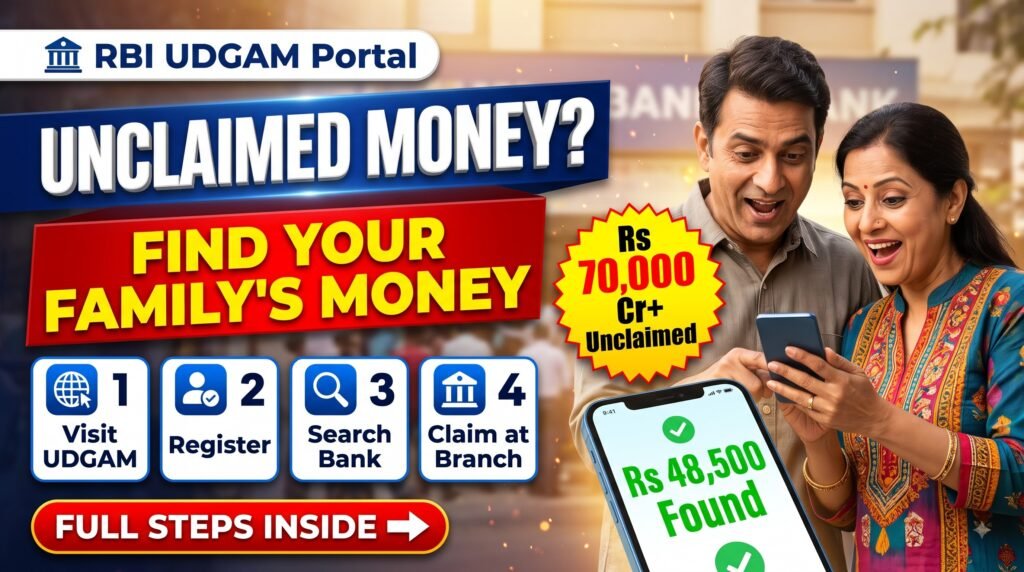
RBI UDGAM is the free official portal from the Reserve Bank of India that lets you search unclaimed bank deposits across many banks in one place.
Did your parents or grandparents have an old bank account that nobody uses anymore? There is a good chance some money is still lying in it, and your family may not even know.
As per government data from early 2026, more than ₹70,000 crore of unclaimed bank deposits are lying with the Reserve Bank of India. The good news is that you can search for this money for free using the RBI UDGAM portal and claim it from the bank.
Table of Contents
Quick Overview
| Detail | Information |
|---|---|
| Portal name | UDGAM (Unclaimed Deposits – Gateway to Access Information) |
| Run by | Reserve Bank of India |
| Website | udgam.rbi.org.in |
| Search fee | Free |
| Where to claim | At the bank branch where the account was held |
What Are Unclaimed Deposits?
If a savings account, current account or fixed deposit has no transaction for 10 years, the bank transfers that balance to the RBI’s Depositor Education and Awareness (DEA) Fund.
This usually happens when the account holder forgets the account, moves to another city, or passes away and the family does not know about the account. But the money is not lost. The account holder or legal heirs can claim it anytime.
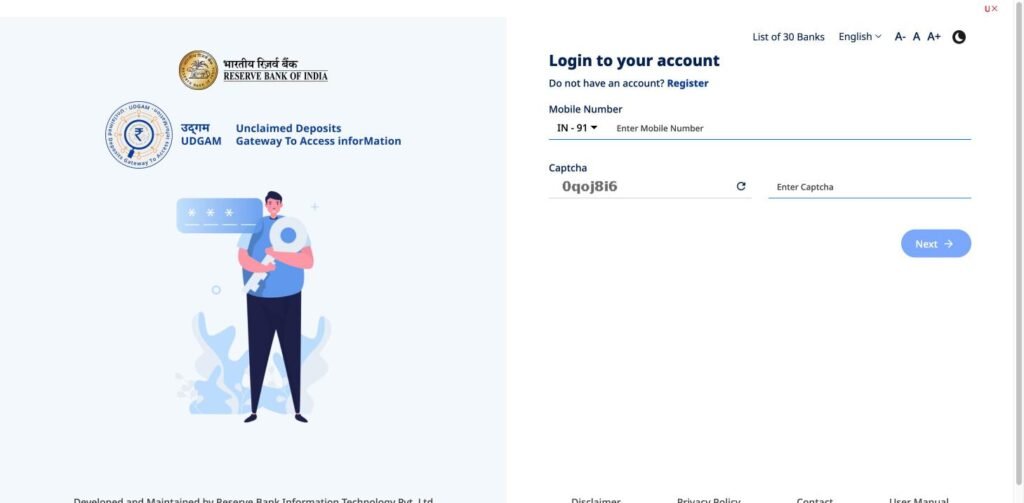
Step 1: Open the RBI UDGAM Website
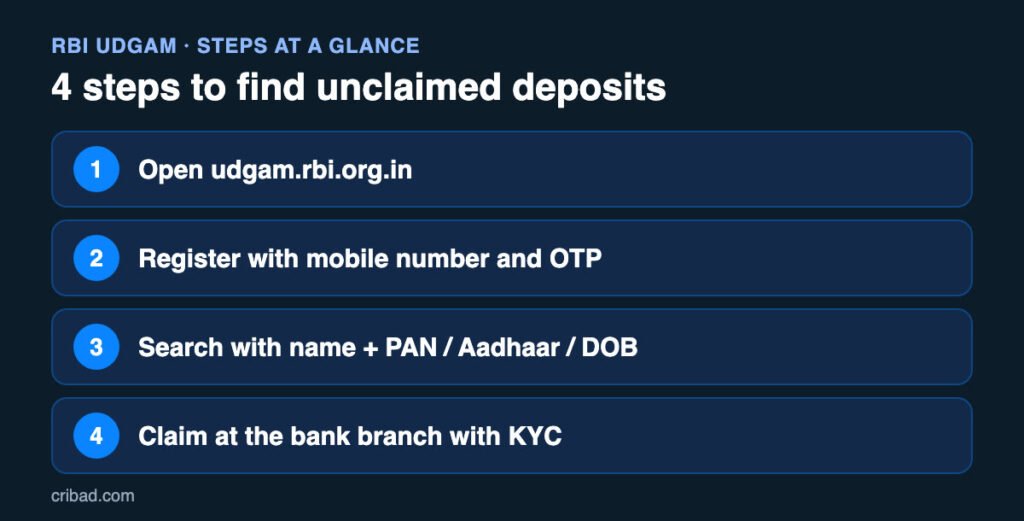
Go to the official website udgam.rbi.org.in. Do not use any other website or app that asks for a fee to search unclaimed deposits.
Step 2: Register with Your Mobile Number
- Click on Register
- Enter your mobile number, name and password
- Verify with the OTP sent to your mobile
- Log in to the portal
Step 3: Search for Unclaimed Deposits
After logging in, enter the details of the account holder:
- Account holder’s name (as in bank records)
- Select the banks you want to search, or select all
- Any one of: PAN, Voter ID, Driving Licence, Passport number or date of birth
The portal will show the banks where unclaimed deposits are found for that name, along with a reference number.

Step 4: Claim the Money at the Bank Branch
UDGAM is only a search portal, not a claim portal. To get the money, visit the bank shown in the results.
- Fill the claim / deposit reactivation form
- Submit KYC documents: Aadhaar, PAN and a photo
- If the account holder has died, the nominee or legal heir can claim with the death certificate and required documents
- The bank verifies the details and pays the amount
RBI UDGAM: Documents You Need to Claim the Money
Once RBI UDGAM shows a match, the actual claim happens at the bank, not on the portal. Keep these documents ready before you visit the branch so the process is quick:
- Valid photo ID and address proof (Aadhaar, PAN, passport or voter ID)
- Old passbook, cheque book or FD receipt, if you still have it
- Recent passport-size photographs
- The claim form of the bank, filled and signed
- For a deceased account holder: death certificate and nominee or legal heir documents
The bank verifies your identity, settles the claim and pays the amount along with applicable interest. The bank then claims the same amount back from the RBI DEA Fund, so you do not need to deal with the RBI directly.
Why RBI UDGAM Is Better Than Searching Each Bank
Before RBI UDGAM, families had to visit or write to every bank separately to ask about old accounts. Now one search on RBI UDGAM checks the unclaimed deposit data shared by the participating banks.
- One login, many banks covered
- No fee for searching
- Works for savings accounts, current accounts and fixed deposits
- Shows the bank name and a reference number that you can take to the branch
If your bank is not listed on RBI UDGAM, contact that bank directly. Every bank also publishes its own list of unclaimed deposits on its website.
Common Mistakes to Avoid on RBI UDGAM
- Using a fake website or paying an agent. The official RBI UDGAM search is free.
- Spelling the name differently from bank records. Try short forms and initials too.
- Giving up after one search. Search with PAN, then with date of birth, then with address.
- Waiting too long. There is no deadline, but old records are easier to verify early.
Watch the Video
Important Safety Tips
- Searching on UDGAM is completely free
- Never pay any agent to “recover” unclaimed money
- Do not share OTP or bank passwords with anyone
- Only use the official udgam.rbi.org.in website
Frequently Asked Questions
Is there a time limit to claim unclaimed deposits?
No. Even after the money is transferred to the RBI DEA Fund, the depositor or legal heirs can claim it from the bank at any time.
Can I claim money from my late father’s account?
Yes. If you are the nominee or legal heir, you can claim it by submitting the death certificate and the documents the bank asks for.
Are all banks covered on UDGAM?
As per the government, around 30 banks covering about 90% of unclaimed deposits by value are part of UDGAM. If your bank is not listed, contact the bank directly.

Is RBI UDGAM safe to use?
Yes. RBI UDGAM is the official portal of the Reserve Bank of India. Always open it by typing udgam.rbi.org.in and never share your OTP with anyone.
Does RBI UDGAM pay the money directly?
No. RBI UDGAM only helps you find the deposit. You claim the money at the bank branch that held the account.
Related Guides
- PMSBY and PMJJBY: Get ₹2 Lakh Insurance for Just ₹20 and ₹436 a Year
- How to Lock Aadhaar Biometrics and Stop AePS Fraud (Step by Step)
- How to Check EPF Balance with a Missed Call or SMS (No Internet Needed)
Official source: RBI UDGAM official portal. Always verify the latest rules on the official website.
Conclusion
Take five minutes today and search your family members’ names on the RBI UDGAM portal. You may find money that your family forgot years ago. Share this guide with your parents and relatives so they can check too.
Disclaimer: This article is for information purposes only. Figures are based on government data available at the time of writing. Please check udgam.rbi.org.in and your bank for the latest process.